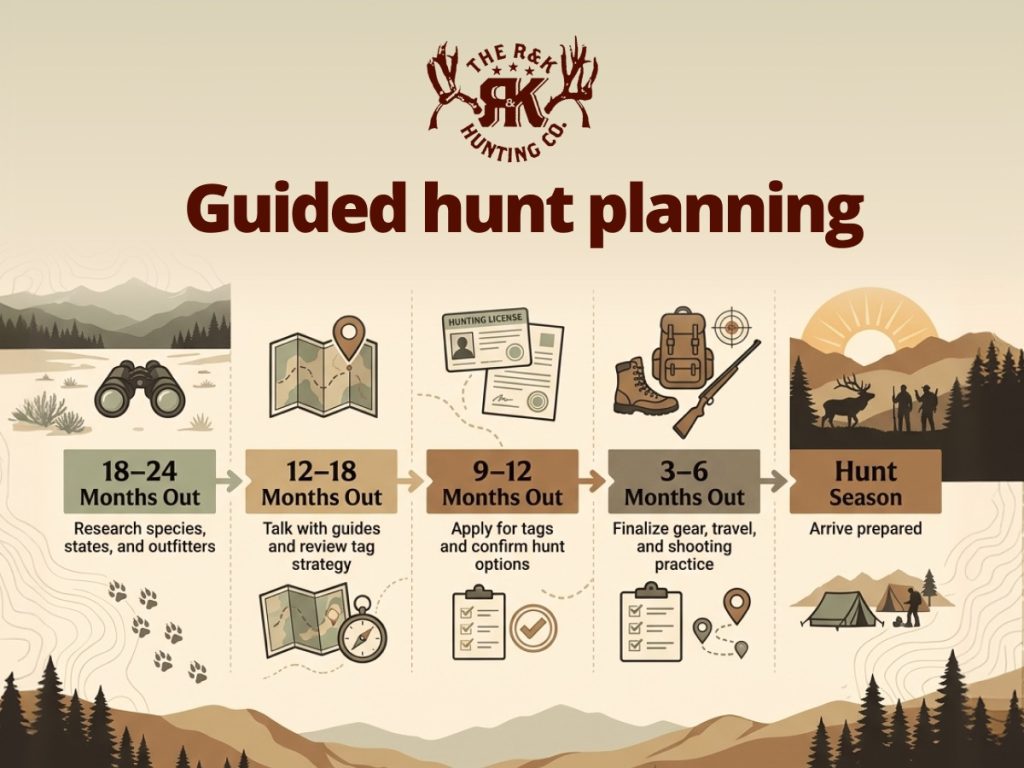
Most hunters should start planning guided hunts nine to 18 months in advance. For high-demand elk, mule deer, moose, antelope, private-land hunts, or preferred season dates, start 18 to 24 months ahead. Early planning gives you more time to handle draw deadlines, tags, guide availability, travel, gear, shooting practice, and backup options.
Start planning before the season gets close
A good hunt usually starts before the season opens. Guided hunting trips in Utah and Wyoming depend on tags, draw dates, weapon seasons, access, and terrain. If you’re comparing Utah hunting guides, Wyoming hunting guides, or different species, start the conversation early, so you have better options before you apply or book.
How early should you book a guided hunt?
For most Western guided hunts, nine to 18 months is a good planning window. If you’re looking at a premium species, a limited-entry tag, a private-land opportunity, or a specific season window, 18 to 24 months gives you a better start.
A simple timeline works well:
- 18 to 24 months out: Best for high-demand elk, mule deer, moose, antelope, limited-entry tags, private-land opportunities, and preferred dates.
- 12 to 18 months out: A strong window for most serious guided hunting trips, especially if you want help before application season.
- 9 to 12 months out: Workable if you’re flexible on dates, species, weapon, or hunt area.
- 3 to 6 months out: Possible when cancellations, leftover tags, or flexible options exist.
- Last minute: Worth asking about, but it shouldn’t be the main plan.
It’s good to start the conversation before everything is locked in. An outfitter helps you sort through species, dates, terrain, tag options, and expectations before you commit to a plan.
Why guided hunts book so far ahead
Prime dates fill first
Rut windows, rifle openers, and better weather windows often get claimed well before the season. Once those dates are full, hunters may still find options, but they’ll have less room to choose.
Access takes planning
Private-land and ranch-based hunts require careful pressure management. Outfitters have to plan how many hunters are in each area, when they hunt, and how the country will hold up during the season.
Logistics need time
Guide availability, lodging, meals, scouting, travel timing, and hunt areas all have to fit together. That gets harder to sort out when the season is already close.
Hunters need time to prepare
Boots need miles on them. Rifles, bows, and muzzleloaders need practice from field positions. Layers, packs, optics, coolers, and meat-care plans should be checked before the hunt is upon you.
How tag draws affect your booking timeline
Tags often shape the hunt before the season dates do. Talk with an outfitter before application windows open, especially for guided hunting trips tied to limited-entry areas, nonresident tags, or point systems.
Utah and Wyoming handle draws differently. Utah uses bonus and preference points, while Wyoming nonresident planning often involves preference points, hunt areas, and license types.
Booking after the draw results still works, but guide dates and preferred hunt windows may already be tight. An early conversation gives you more room to plan or build a backup option.
How weapon season changes timing
Weapon season affects more than the date on your tag. It changes animal behavior, hunting pressure, gear needs, shooting practice, weather, and how the hunt plays out.
Archery hunts
Archery hunts often come earlier in the fall. Elk archery seasons may line up with rut activity, calling, and close-range setups. These hunts usually require more patience, practice, and control under pressure.
Rifle hunts
Rifle hunts often come later. Hunters may face cooler weather, changing access, and increased pressure in certain areas. Prime rifle dates also fill early because many hunters prefer firearm seasons.
Muzzleloader hunts
Muzzleloader hunts sit in their own lane. Depending on the state and species, they may fall between archery and rifle or later in the season. Hunters need time to check legal equipment rules, practice at realistic ranges, and prepare for changing weather.
For guided hunting trips, talk through weapon choice early. A guide builds a better plan when they know your shooting comfort, effective range, and physical readiness before the hunt starts.
Resident vs. nonresident planning
Residency changes the timeline. Nonresidents usually need more lead time because tag access, application rules, travel, and point systems add extra layers to the plan.
Nonresidents should start earlier
If you’re a nonresident looking at premium elk, mule deer, moose, or antelope, start 18 to 24 months ahead when possible. That gives you more time to understand the draw, compare hunt areas, watch deadlines, and plan around travel.
Residents still need to plan ahead
Residents may have more flexibility in some situations, but they still shouldn’t wait too long. Better tag access doesn’t create more guide openings. If you’re looking at limited-entry hunts, private-land dates, or a specific season, 12 to 18 months is still a smart window.
State rules change the plan
This is especially true when comparing Utah hunting guides and Wyoming hunting guides. Each state has different draw rules, terrain, access, species opportunities, and season timing.
Common mistakes hunters make
- Waiting until the draw results to call an outfitter: You may still find options, but dates and backup plans will be limited.
- Choosing a weapon season too quickly: Archery, rifle, and muzzleloader hunts each take different preparation. Pick the season that fits your ability, schedule, and expectations.
- Assuming resident status means there’s no rush: Residents may have better tag access in some cases, but guide availability still fills early.
- Booking travel before confirming the hunt plan: Flights, time off, and lodging should follow the tag, dates, and outfitter details.
- Skipping the honest conversation: Your guide needs to know your fitness, shooting comfort, and expectations to build a plan that fits.
- Leaving meat care until the end: Coolers, processing, pack-out plans, and travel timing should be handled before you’re in the field.
Data, draw systems, and planning insights
Draw deadlines often arrive months before the season, and each state handles applications differently. Use the official resources early so you’re not building a hunt plan after key windows have already closed.
- Utah points system: Utah uses bonus points for limited-entry, CWMU, and once-in-a-lifetime hunts. Preference points apply to general-season buck deer and some antlerless permits.
- Wyoming Hunt Planner: Wyoming’s Hunt Planner includes hunt areas, species-specific information, drawing odds, harvest information, public access, and other planning details.
- Wyoming preference point split: 75% of available licenses are awarded through preference points, while 25% are awarded through a random draw.
Tools and recommendations
Before you call an outfitter, gather the basics:
- Preferred species
- Resident or nonresident status
- Current points
- Preferred state
- Weapon choice
- Flexible date windows
- Fitness level
- Shooting comfort and effective range
- Travel needs
- Meat-care plan
- Questions about what’s included
Also, check current state resources. Utah hunters should review the Utah Division of Wildlife Resources application information and current regulations. Wyoming hunters should review Wyoming Game and Fish application deadlines, Hunt Planner information, and current regulations.
Then, talk with the outfitter. Guided hunts go better when the guide has enough information to help you compare dates, terrain, access, tags, and expectations. That early call is also a good time to ask Utah hunting guides or Wyoming hunting guides how current draw rules, access, and season timing affect your options.
FAQ
What if I book a guided hunt and don’t draw?
It depends on the outfitter’s policy. Some plans may roll forward, shift to another opportunity, or change based on available tags. Ask before booking.
Do nonresidents need to book guided hunts earlier?
Usually, yes. Nonresidents often face smaller tag pools, more travel planning, and more complicated draw strategies. Starting early gives them more room to compare options.
Are guided hunts worth it?
Guided hunts are worth it if you want local knowledge, access to support, and a clearer plan. A guide reduces guesswork, but you still need to show up prepared.
What is the 7-day rule for deer hunting?
The 7-day rule is a theory that mature bucks may revisit the same area around the same time each week.
What are the four C’s of hunting?
The four C’s are usually taught as careful, courteous, considerate, and capable. They describe safe, ethical behavior in the field.
Plan your next hunt with R&K Hunting Company
A better hunt starts with a clear plan. R&K Hunting Company helps you compare species, tags, season dates, terrain, access, and guide availability before the season gets close. If you’re considering guided hunting trips in Utah or Wyoming, contact R&K Hunting early to discuss your options and start building a plan that fits your goals.